Starring: Casey Affleck, Michelle Williams, Lucas Hedges, Kyle Chandler
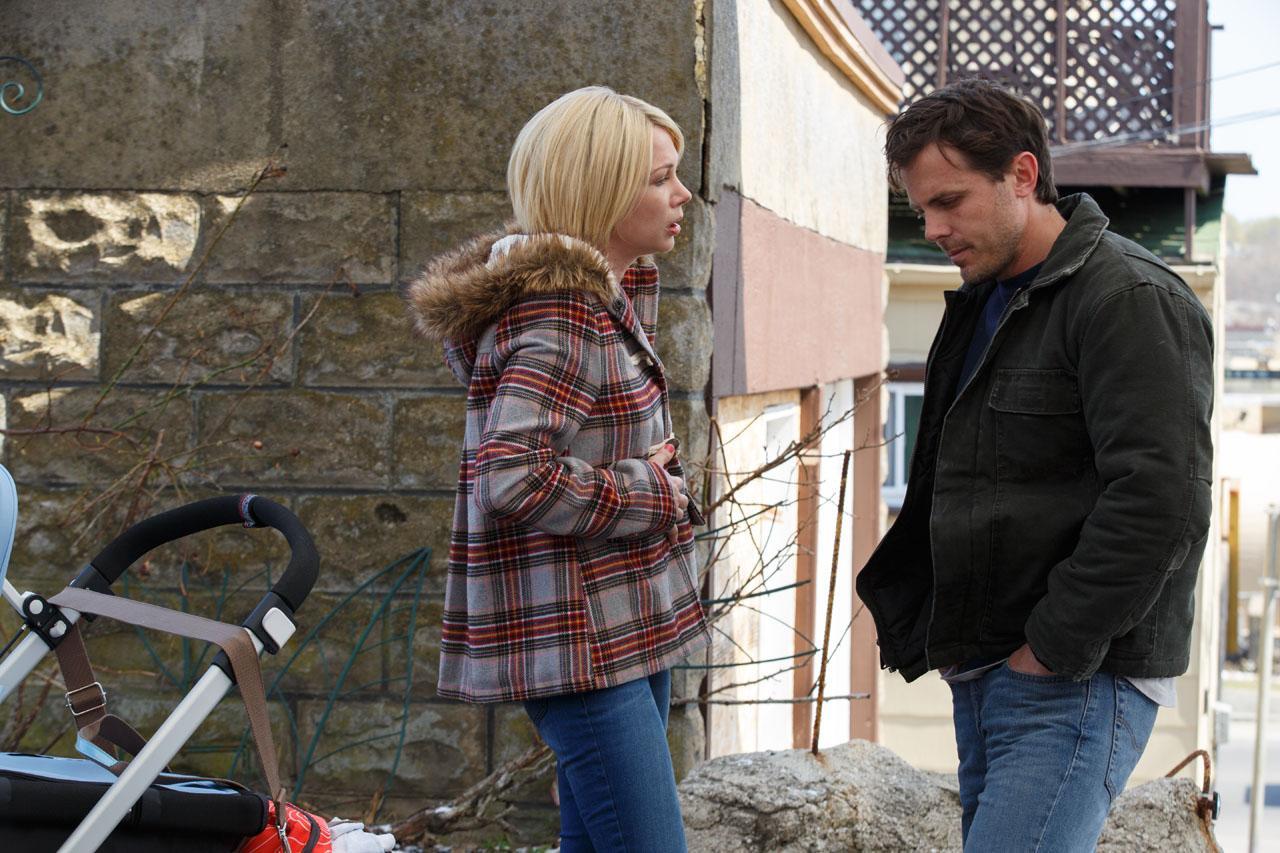
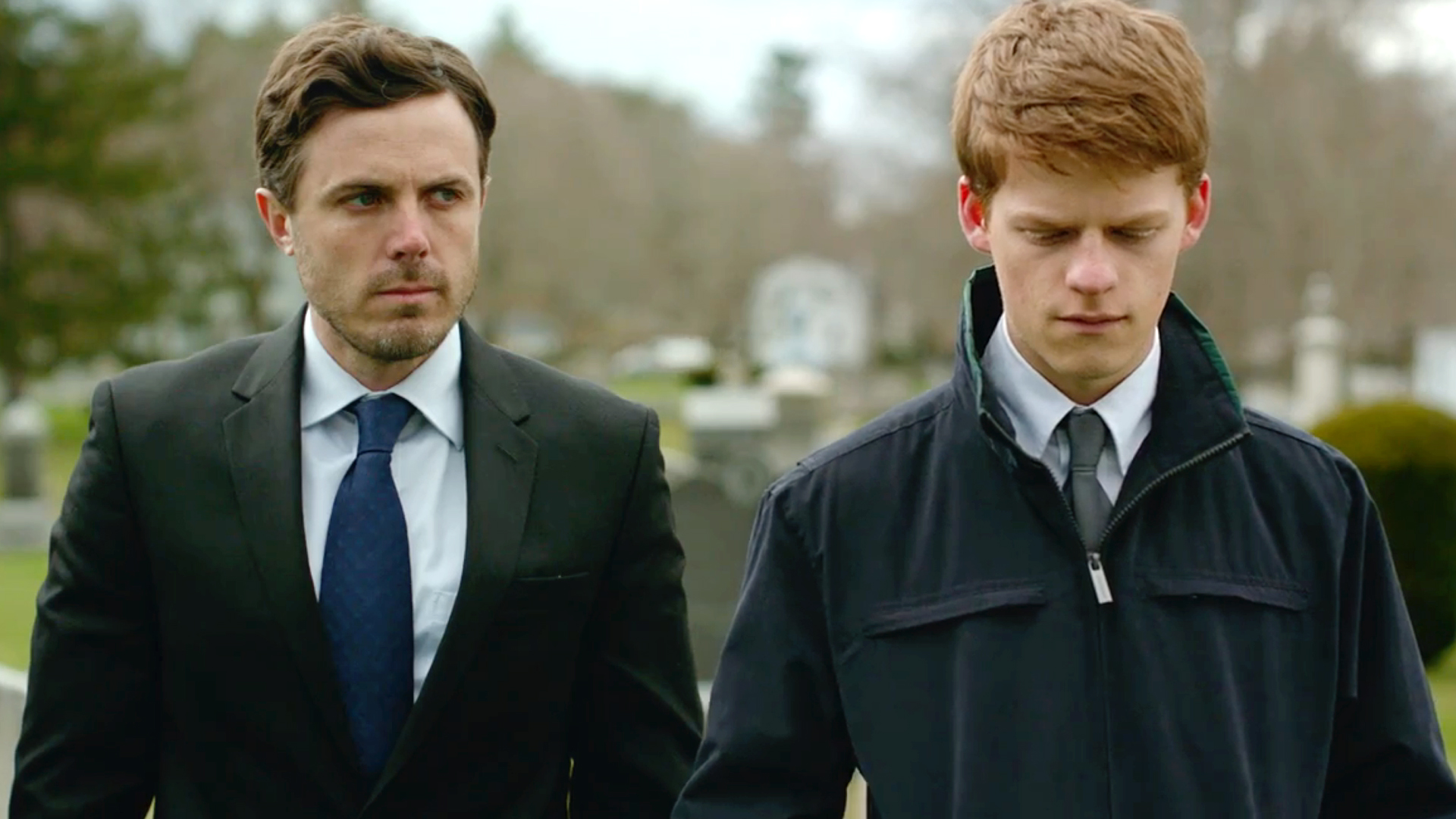
Manchester by the Sea has been pegged as one of three of the Academy Award front-runners this year. Along with La La Land and Moonlight (which I previously reviewed), Manchester by the Sea has a lot of awards buzz, and has been doing very well in a semi-wide release over the past few weeks. The most attention has been directed towards Casey Affleck's mesmerizing performance as a man struggling with grief. Lee Chandler has a horrible past that is following him. After traumatic events, he has split from his wife Randi and become the black sheep of the Chandler family. When his beloved brother (the only one who still cared for him) dies suddenly, he must go back to Manchester and take care of his nephew Patrick. He has to face the town and wife he left behind, and learns that his brother named him as Patrick's guardian. Manchester by the Sea is a raw film. It does nothing to try and sugar coat the tumultuous feelings of grief and how it affects us all. It does not try to pretend that grief ever goes away. Manchester by the Sea feels like this decade's Good Will Hunting, in which it presents a specific situation that applies to life. In that film, it was a story of two men: a cocky genius and a soft psychologist who shows him how to open up, and their friendship teaches both men things about themselves. In this film, it's a man and his nephew, and how their unlikely partnership helps them both live with the different sorts of grief and loneliness they feel.
Instead of addressing the acting, I'm going to delve into the characters. All the acting is top-notch, but it doesn't feel like acting. Each character feels like an everyday person. Every single one of us could become Lee Chandler. Whenever something bad happens, there is always the option to pack a bag and leave. Manchester by the Sea is evidence that you can never escape your past. Lee sees his nephew Patrick and sees himself. He sees a cocky little kid in denial about death, that just wants to move on. Throughout the film we see Lee teach Patrick that it's okay to cry, to yell, and to be angry at the world. In return, Patrick shows Lee that he's never really gotten over his past, and that makes it even harder to try and take care of a boy and accept a new loss. Lee tearfully tells Patrick: "I can't beat it. I can't beat it", and I feel that is incredibly true of grief. It never goes away. Speaking of never going away, Lee's ex-wife Randi comes and goes like the tide. He's cut all ties with her, yet she suddenly calls him to tell him she's pregnant, and wiggles her way into his brother's services. She looks at him across the church and her face is unreadable. You cannot see if her eyes are hiding hatred or sorrow, or possibly a blank expression. In one of the final scenes, she meets Lee and confesses that she still loves him. It's possibly the best scene in the movie. The first time I saw this movie I hated Randi. I thought she lacked respect for Lee's grief. On my second viewing I saw how realistic her pain was. She has been dragged through hell with him, and what she does is a rational thing someone with a broken heart would do. She and Lee are so similar, but they both have suffered too much to ever have a realistic future. Pain and loss have marred both of them permanently.
Manchester by the Sea unfolds in an unusual fashion. Last year, the Oscar-winning Room met its ultimate climax in the middle, rather than the end. The mother and child escaped their prison in a tense and moving moment, and the rest of the movie's pace went down from there. It was so unusual that I had trouble wrapping my head around it. We're so used to seeing movies peak at the end. Manchester by the Sea also finds its climax in the first third of the film. The pace is slowly increasing, and the stage is set for the reveal of what happened to Lee Chandler and his family. We see in backstories that they're all one big happy family...so what happened? The revelation is heartbreaking. Every viewer's heart will be in their stomach at the horrifyingly real depiction of loss. Manchester by the Sea lives by the motto of "show, don't tell." The script is so brilliant in this sense, as you learn of events by seeing them firsthand, rather than hearing them through dialogue. Instead of seeing someone explain that Lee's ex-wife is telling lies about him, we see him struggle around town, as everyone sides with what we presume is Randi's story. The "show, don't tell" method also works for the attempts at humor in the film. Don't get me wrong. This film is an emotional spiral downwards, and one of the saddest films I've ever seen. But it is those few lighthearted moments of awkward humor between uncle and nephew that make you feel like there is hope for these suffering people.
I predict that Manchester by the Sea will be one of the biggest awards contenders this year. If you have been following the awards circuit, you have seen that Casey Affleck has deservedly won nearly every award for his performance, with Williams and Hedges also getting recognized for playing Randi and Patrick respectively. It's a hard movie to swallow, but it is one that demands your attention. The characters are not subtle references to any aspect of the human experience, and Lee is not a window into the mind of a man with grief. These are just ordinary people whose worlds have been shattered.
Rating:
Tuesday, January 10, 2017
Friday, January 6, 2017
Rogue One Review
Starring: Felicity Jones, Diego Luna, Ben Mendolsohn, Donnie Yen, Mads Mikkelsen, Alan Tudyk, Riz Ahmed, Jiang Wen, Forest Whitaker, James Earl Jones
Everyone loves Star Wars, right? Of course I know that is not true, but when you're dealing with one of the most beloved and long-lasting series of all time, you can pretty much assume it's going to be successful. The Force Awakens broke almost every record, and while Rogue One didn't soar to the heights as its predecessor in its first week, it's still guaranteed a pretty hefty amount of dollars. What I love about Star Wars is that I can rely on George Lucas and Kathleen Kennedy (the president of LucasFilm and longtime collaborator) to produce good movies. They know the audience is there, and they know they don't have to "sell" tickets to the masses, they will sell themselves. With Rogue One, the story is a little different. This isn't a sequel to The Force Awakens. It takes place in between Revenge of the Sith and A New Hope and is considered a spin-off. I walked into the film hoping it would contain the same level of excitement and nostalgia that The Force Awakens had. I wanted a Star Wars experience. I read some early reviews and reactions and saw some very divided critics. After seeing the movie myself, I think that it does live up to my expectations of a Star Wars film. If you're a fan, you'll love this movie just as you have loved the rest.
As far as the cast, everyone does well. Felicity Jones is always a convincing lead, and her performance really grounds the film. I was worried she would just be another Rey, but her character's confidence really separated her from Rey's sense of wonder. Jyn Erso is a conditioned veteran. She knows how to fight, and she has nothing to lose. Diego Luna provided an interesting counter to Jones, but I didn't find his character particularly compelling. He had no backstory to get invested in. I am glad that the two of them never had a romance. After many "will they, won't they?" moments, I'm glad that their was no kiss. Donnie Yen's performance as a blind force-sensitive man was my favorite human character, and I was surprised at the amount of depth they gave his character. He was the stand-in Jedi for the film. I also really liked K-2, the robot sidekick. He had the kind of sarcasm that you know R2-D2 has, only he was able to articulate. And he had the best lines of the film. As far as Mads Mikkelsen and Ben Mendelsohn go, they really didn't give big performance. Jyn's father really didn't do anything, and Director Krennic was a Tarkin stand-in (more on that later). The only sub-par performance was given by Forest Whitaker. Was his name Saul? Saw? I could not care less. I felt that that entire scene was throwaway. From the trailers, it is clear that most of Whitaker's scenes were deleted, but they had to keep him in the film. I don't know. I haven't the slightest clue why he spoke like he couldn't breathe. I know he had an apparatus, but why not just take it off him and let Whitaker really speak? The whole scene was underwhelming and unnecessary.
Of the thematic elements I enjoyed, the score was my favorite. This is the first non-John Williams score, so you can imagine the interest. Michael Giacchino (Up, Lost) does a wonderful job interpreting Williams' iconic scores of Star Wars films past, but adds his flare to it. I wouldn't be surprised if it wins the Oscar. It truly is that impressive. As far as Darth Vader goes, his first scene is pretty standard. It's not amazing, and it's not disappointing. I imagined that would be all the Vader I would get. But lo and behold, the ending scene is the crazed, ballistic Darth Vader I've always wanted. You imagine he must be good with his lightsaber, but we've never really seen him fight.
SPOILERS: One of the big things I was not a fan of were the visual effects. They created Grand Moff Tarkin using visual effects. In Life of Pi, they create a tiger. In Rogue One, they literally bring a dead actor back to life and it really freaked me out. I was suspecting that he would be back, but not in that capacity. I'm just worried about what this means for the future of films. It makes death mean nothing, and actors may have to sign their likeness over to companies like Disney. Franchises could never grow old. I appreciate the vision and scope, but the whole idea really leaves a negative feeling. I was also not a fan of Gareth Edwards' directing. I enjoyed how the film was more stark and real, and depicted wartime in the galaxy, but I felt like his pacing was off. There was a section in the middle where he was really losing me. All in all, if you haven't seen Rogue One, go see it. You'll probably really enjoy it. It may not be as great as The Force Awakens, but it's an interesting expansion on the formula.
Rating:
Everyone loves Star Wars, right? Of course I know that is not true, but when you're dealing with one of the most beloved and long-lasting series of all time, you can pretty much assume it's going to be successful. The Force Awakens broke almost every record, and while Rogue One didn't soar to the heights as its predecessor in its first week, it's still guaranteed a pretty hefty amount of dollars. What I love about Star Wars is that I can rely on George Lucas and Kathleen Kennedy (the president of LucasFilm and longtime collaborator) to produce good movies. They know the audience is there, and they know they don't have to "sell" tickets to the masses, they will sell themselves. With Rogue One, the story is a little different. This isn't a sequel to The Force Awakens. It takes place in between Revenge of the Sith and A New Hope and is considered a spin-off. I walked into the film hoping it would contain the same level of excitement and nostalgia that The Force Awakens had. I wanted a Star Wars experience. I read some early reviews and reactions and saw some very divided critics. After seeing the movie myself, I think that it does live up to my expectations of a Star Wars film. If you're a fan, you'll love this movie just as you have loved the rest.
As far as the cast, everyone does well. Felicity Jones is always a convincing lead, and her performance really grounds the film. I was worried she would just be another Rey, but her character's confidence really separated her from Rey's sense of wonder. Jyn Erso is a conditioned veteran. She knows how to fight, and she has nothing to lose. Diego Luna provided an interesting counter to Jones, but I didn't find his character particularly compelling. He had no backstory to get invested in. I am glad that the two of them never had a romance. After many "will they, won't they?" moments, I'm glad that their was no kiss. Donnie Yen's performance as a blind force-sensitive man was my favorite human character, and I was surprised at the amount of depth they gave his character. He was the stand-in Jedi for the film. I also really liked K-2, the robot sidekick. He had the kind of sarcasm that you know R2-D2 has, only he was able to articulate. And he had the best lines of the film. As far as Mads Mikkelsen and Ben Mendelsohn go, they really didn't give big performance. Jyn's father really didn't do anything, and Director Krennic was a Tarkin stand-in (more on that later). The only sub-par performance was given by Forest Whitaker. Was his name Saul? Saw? I could not care less. I felt that that entire scene was throwaway. From the trailers, it is clear that most of Whitaker's scenes were deleted, but they had to keep him in the film. I don't know. I haven't the slightest clue why he spoke like he couldn't breathe. I know he had an apparatus, but why not just take it off him and let Whitaker really speak? The whole scene was underwhelming and unnecessary.
Of the thematic elements I enjoyed, the score was my favorite. This is the first non-John Williams score, so you can imagine the interest. Michael Giacchino (Up, Lost) does a wonderful job interpreting Williams' iconic scores of Star Wars films past, but adds his flare to it. I wouldn't be surprised if it wins the Oscar. It truly is that impressive. As far as Darth Vader goes, his first scene is pretty standard. It's not amazing, and it's not disappointing. I imagined that would be all the Vader I would get. But lo and behold, the ending scene is the crazed, ballistic Darth Vader I've always wanted. You imagine he must be good with his lightsaber, but we've never really seen him fight.
SPOILERS: One of the big things I was not a fan of were the visual effects. They created Grand Moff Tarkin using visual effects. In Life of Pi, they create a tiger. In Rogue One, they literally bring a dead actor back to life and it really freaked me out. I was suspecting that he would be back, but not in that capacity. I'm just worried about what this means for the future of films. It makes death mean nothing, and actors may have to sign their likeness over to companies like Disney. Franchises could never grow old. I appreciate the vision and scope, but the whole idea really leaves a negative feeling. I was also not a fan of Gareth Edwards' directing. I enjoyed how the film was more stark and real, and depicted wartime in the galaxy, but I felt like his pacing was off. There was a section in the middle where he was really losing me. All in all, if you haven't seen Rogue One, go see it. You'll probably really enjoy it. It may not be as great as The Force Awakens, but it's an interesting expansion on the formula.
Rating:
Wednesday, December 28, 2016
Carrie Fisher: A Legend Lost
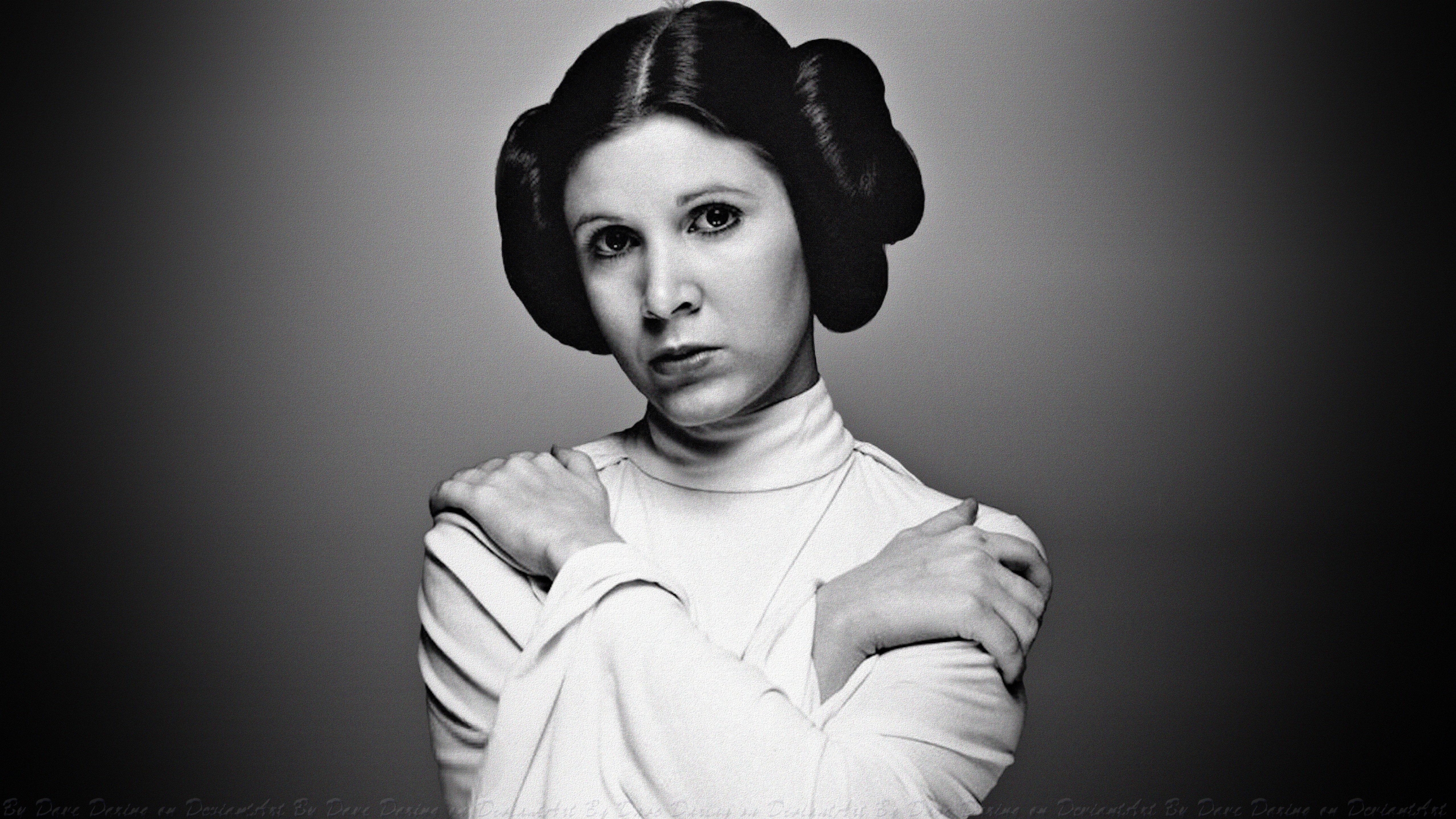
By now you've most definitely heard that Carrie Fisher has passed away at the age of 60. In the years that I have had this blog, many great actors and actresses have died. It's the sad fact of life: everyone will die. Never before has an actor died who was such a huge part of my love for movies. As Princess Leia, Fisher brought to life a defining character of my childhood, and her death particularly stings. Though none of us knew her, she still felt like a close friend to anyone who watched in amazement at Star Wars and any of its sequels. If you look at her body of work compared to actresses like Julia Roberts and Jane Fonda, she lacked the paychecks and awards that many received in their lifetimes. She also never really became a "household name". But isn't the true success of an actor when their work (in her case, Princess Leia) becomes iconic and forever branded into American culture. I'm here to explain and hopefully remind you of the reasons why Carrie Fisher was a legend.
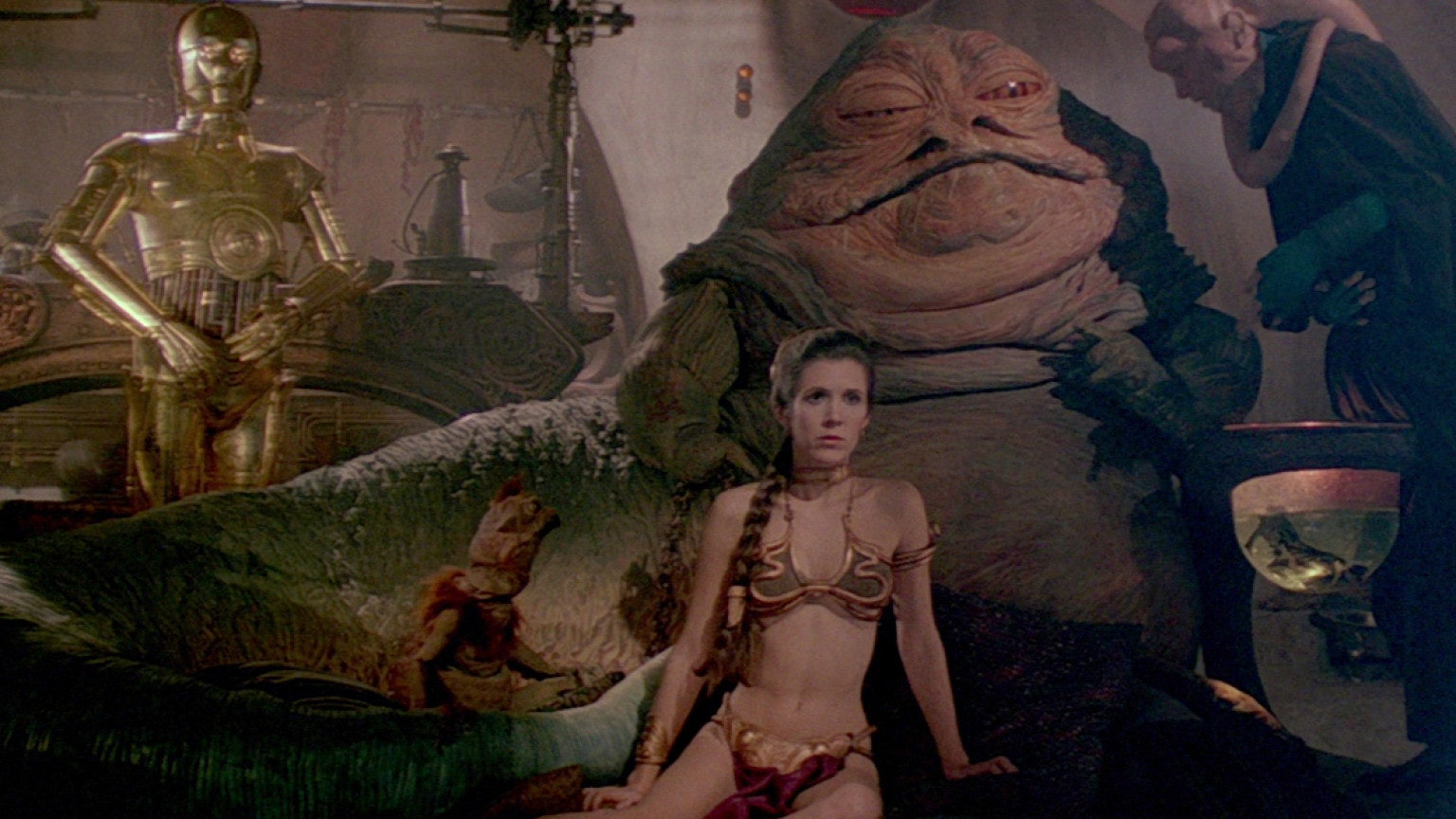
The picture above is of a scene from 1983's Return of the Jedi, in which Princess Leia is captured and chained to Jabba the Hutt as his slave. Her metal bikini instantly became an iconic costume attributed with the character, the Star Wars franchise, and 80's culture as a whole. In the time since Carrie Fisher's passing, I have seen many people asking that the bikini be forgotten, claiming it was a sexist costume, and Fisher was much more than a sexualized object. In case anyone has forgotten, Leia strangled Jabba with the chain of that bikini, killed him, and escape. I'd counter that her act was pretty feminist for that time period. My point is, Carrie Fisher should be remembered for everything she did. She's complained so much about the metal bikini, but it's an iconic part of her career that we will remember fondly. Many are aware that she was very heavily involved with drugs throughout the early stages of her career. This is not a time to forget that she did drugs simply because she has died. This is the time to open up a conversation about the effects of drugs and the effects of fame. She passed away at sixty, and though her cause of death will never be attributed to drugs, they could easily be a factor in her weak heart. Fisher was always open about her mental illness and personal struggles with fame. This is not the time to try to bury the things she has said so we can raise her as a Saint. Share her quotes, because they describe experiences that very few people, let alone celebrities, are willing to open up about. Just knowing someone else shared an experience with an illness and pushed through can give someone hope. And isn't "hope" what Carrie Fisher's iconic character was all about?
I'm also against Carrie Fisher only being remembered for Princess Leia, and I'm happy to see that many are sharing her other achievements. She was a renowned author. Her novel Postcards from the Edge was a bestseller, and she adapted it herself into an Academy Award-nominated film starring Shirley MacLaine and Meryl Streep, for which Streep received a Best Actress nomination. She wrote numerous other books, all of which were autobiographical or semi-autobiographical. She was known for supporting roles in Woody Allen's Hannah and Her Sisters, and the films Shampoo and When Harry Met Sally. She even appeared as a fictional version of herself in 30 Rock and received an Emmy nomination. If you've ever seen Fisher interviewed, you have seen her irresistible charm and witty humor. As I searched the Internet for these videos, I found clips of Fisher on The Late Show only a month prior to her heart attack. Her sharp and edgy sense of humor is hilarious. She had just released her tell-all autobiography The Princess Diarist, which famously revealed she and Harrison Ford had engaged in a love affair on the set of Star Wars. I don't want to trivialize her passing, but I think she went out in a way she would have liked: by dropping the bombshell that she slept with one of Hollywood's biggest hunks, and in doing so, probably pissed her friend Harrison Ford off.
Personally, the death of Carrie Fisher hurts because I felt like I grew up with her. Of course, this is completely false, given that she is about forty years my senior. But when I was six or seven and watching Star Wars with my brother and father, I had no idea that the film came out in 1977, nor did I have any real concept of time. I watched the original trilogy more times than I could count, and sometimes on what seemed like a loop. I can remember being grossed out every time I saw Leia's kiss with Luke, two movies before she would learn he was her twin brother. I can remember the buildup of the inevitable romance with Han Solo, and the pretty steamy moment where they finally reveal their love in Empire Strikes Back. I remember the shock on her face when her true love is immobilized in carbonite with the famous "I love you / I know" exchange. Princess Leia, along with Luke, Han Solo and all the characters were pretty strong influences on my childhood. I played Star Wars with my friends on the playground and we acted out the movies (and several side-stories that I'm sure George Lucas was intending for more sequels) at recess and in my backyard. Last December, I was enjoying nerd-heaven when The Force Awakens came out. All of my favorite characters were coming back, and they had all aged. I felt as if the characters I knew and loved grew up with me, and I was back on an adventure with my old friends.
Finally, I have always thought that Leia was the princess that little girls should aspire to be, rather than the unobtainable Disney princesses. She didn't care what she said, and she had a temper. She wasn't the perfect weight, she was a real human. She had a gun and she liked to shoot it. Nobody was going to protect her. She fought herself. In the role of Leia, Fisher broke down every barrier for female heroines in an era where there simply were none. Characters like Ripley in Alien, Katniss in The Hunger Games and even Moana owe their successes to Carrie Fisher. Many female actors in action movies owe their careers to Fisher taking the first step in 1977. While her personal life isn't the best model of behavior, her later life shows a willingness to accept one's past and move forward. You'd be hard pressed to find a more realistic role model for girls. I hope that in the afterlife she's found R2-D2 (actor Kenny Baker alsopassed away in 2016) and they're waiting for the rest of the crew to join them. Rest in peace Carrie, in a galaxy far, far away. Your fans will never stop missing you.
The picture above is of a scene from 1983's Return of the Jedi, in which Princess Leia is captured and chained to Jabba the Hutt as his slave. Her metal bikini instantly became an iconic costume attributed with the character, the Star Wars franchise, and 80's culture as a whole. In the time since Carrie Fisher's passing, I have seen many people asking that the bikini be forgotten, claiming it was a sexist costume, and Fisher was much more than a sexualized object. In case anyone has forgotten, Leia strangled Jabba with the chain of that bikini, killed him, and escape. I'd counter that her act was pretty feminist for that time period. My point is, Carrie Fisher should be remembered for everything she did. She's complained so much about the metal bikini, but it's an iconic part of her career that we will remember fondly. Many are aware that she was very heavily involved with drugs throughout the early stages of her career. This is not a time to forget that she did drugs simply because she has died. This is the time to open up a conversation about the effects of drugs and the effects of fame. She passed away at sixty, and though her cause of death will never be attributed to drugs, they could easily be a factor in her weak heart. Fisher was always open about her mental illness and personal struggles with fame. This is not the time to try to bury the things she has said so we can raise her as a Saint. Share her quotes, because they describe experiences that very few people, let alone celebrities, are willing to open up about. Just knowing someone else shared an experience with an illness and pushed through can give someone hope. And isn't "hope" what Carrie Fisher's iconic character was all about?
I'm also against Carrie Fisher only being remembered for Princess Leia, and I'm happy to see that many are sharing her other achievements. She was a renowned author. Her novel Postcards from the Edge was a bestseller, and she adapted it herself into an Academy Award-nominated film starring Shirley MacLaine and Meryl Streep, for which Streep received a Best Actress nomination. She wrote numerous other books, all of which were autobiographical or semi-autobiographical. She was known for supporting roles in Woody Allen's Hannah and Her Sisters, and the films Shampoo and When Harry Met Sally. She even appeared as a fictional version of herself in 30 Rock and received an Emmy nomination. If you've ever seen Fisher interviewed, you have seen her irresistible charm and witty humor. As I searched the Internet for these videos, I found clips of Fisher on The Late Show only a month prior to her heart attack. Her sharp and edgy sense of humor is hilarious. She had just released her tell-all autobiography The Princess Diarist, which famously revealed she and Harrison Ford had engaged in a love affair on the set of Star Wars. I don't want to trivialize her passing, but I think she went out in a way she would have liked: by dropping the bombshell that she slept with one of Hollywood's biggest hunks, and in doing so, probably pissed her friend Harrison Ford off.
Personally, the death of Carrie Fisher hurts because I felt like I grew up with her. Of course, this is completely false, given that she is about forty years my senior. But when I was six or seven and watching Star Wars with my brother and father, I had no idea that the film came out in 1977, nor did I have any real concept of time. I watched the original trilogy more times than I could count, and sometimes on what seemed like a loop. I can remember being grossed out every time I saw Leia's kiss with Luke, two movies before she would learn he was her twin brother. I can remember the buildup of the inevitable romance with Han Solo, and the pretty steamy moment where they finally reveal their love in Empire Strikes Back. I remember the shock on her face when her true love is immobilized in carbonite with the famous "I love you / I know" exchange. Princess Leia, along with Luke, Han Solo and all the characters were pretty strong influences on my childhood. I played Star Wars with my friends on the playground and we acted out the movies (and several side-stories that I'm sure George Lucas was intending for more sequels) at recess and in my backyard. Last December, I was enjoying nerd-heaven when The Force Awakens came out. All of my favorite characters were coming back, and they had all aged. I felt as if the characters I knew and loved grew up with me, and I was back on an adventure with my old friends.
Finally, I have always thought that Leia was the princess that little girls should aspire to be, rather than the unobtainable Disney princesses. She didn't care what she said, and she had a temper. She wasn't the perfect weight, she was a real human. She had a gun and she liked to shoot it. Nobody was going to protect her. She fought herself. In the role of Leia, Fisher broke down every barrier for female heroines in an era where there simply were none. Characters like Ripley in Alien, Katniss in The Hunger Games and even Moana owe their successes to Carrie Fisher. Many female actors in action movies owe their careers to Fisher taking the first step in 1977. While her personal life isn't the best model of behavior, her later life shows a willingness to accept one's past and move forward. You'd be hard pressed to find a more realistic role model for girls. I hope that in the afterlife she's found R2-D2 (actor Kenny Baker alsopassed away in 2016) and they're waiting for the rest of the crew to join them. Rest in peace Carrie, in a galaxy far, far away. Your fans will never stop missing you.
Saturday, December 24, 2016
Moana Review
Starring: Auli'i Cravalho, Dwayne Johnson, Rachel House, Christopher Jackson, Nicole Scherzinger
Moana is the newest film from the Disney empire. Since 2013, Disney has tried to recapture the magic of Frozen. Frozen received unanimous acclaim from critics, made $400 million in America alone, over $1 billion worldwide, produced the Top 5 hit song "Let It Go", and won two Oscars. After a few years spent trying to recreate that success, we were gifted with two Disney films in 2016: Zootopia in March and Moana in November. I'm blown away by the craftsmanship in both films. While I never reviewed Zootopia (I actually did not see it in theaters) it will 100% be a contender for my favorite movie of the year. It's on Netflix, go check it out. But alas, this isn't a review about Zootopia, this is about Moana, the Polynesian princess tale from the Mouse House. The reason I bring up the perfection of Zootopia is to compare to the perfection of Moana. This proves that Disney is paying attention to detail, enough to produce two amazing films. I'd even call it a second Renaissance. I cannot speak for the cultural authenticity of Moana, but from what I've heard from individuals of Polynesian heritage, it does a pretty great job portraying the culture, lore, and values. As a Disney fan, Moana is one of the best Disney movies in my recent memory. The music, composed and written beautifully by Lin-Manuel Miranda of Hamilton perfectly captures the scenery, yet also taps into the modern viewer. The art and animation is gorgeous, and the characters of Moana and Maui seem so real. The voice work from newcomer Auli'i Cravalho and Dwayne Johnson seems effortless, and the story and its themes are touching and inspirational. It's perfect for all ages.
The soundtrack to Moana is excellent. It has become the staple of Disney musicals to include pop hits. Look to the entire soundtrack of Tangled as an example. Even Frozen did not include any music that was culturally significant of the Nordic people, which was disappointing. Moana includes songs that are heavily derived from Polynesian culture, which is thanks to the brilliant Lin-Manuel Miranda. If you're a Hamilton fan, you will instantly be able to recognize his style of songwriting, and most of it isn't even rap! The soundtrack perfectly blends with the story of the film. There is the classic Disney "I want" song (think "Part of Your World", "Belle", "For the First Time in Forever" and a classic villain song. The latter somehow makes it in, even though there is no clear antagonist. Moana brilliantly works without any romantic subplot (don't worry, Maui and Moana do not hook up) and no major villain. I won't spoil the ending, but there is a very interesting twist with Te Ka, who is the sort-of villain (even he isn't in the majority of the film, even if he's the looming threat.)
What is amazing to me, is how Moana doesn't just "work" in every department, it exceeds anything I expected. The story is rich with Polynesian culture and values. Moana goes through a very difficult test of her faith, and you begin to notice Maui goes through the same journey. The chicken Heihei, which actually annoyed me at first, ended up being pretty funny and useful to the plot (and kids LOVED him) Every song made its mark, and I've been singing them all since. The animation is beautiful and impressive. If you notice the stills I've pulled, the film does a great job displaying low-light scenes during dusk and dawn. The ocean is gorgeously animated, and the way it actuallt plays a character is breathtaking. There's a scene about ancestors (I won't spoil) and it gave me chills, and still does when I think of it. There's too much to say about Moana. It's the only film so far that I feel truly deserves its perfect rating. Even if it may not feel like it's perfect to you, I challenge you to find a narrative or creative flaw (not a personal one). I think you'll have a hard time.
Rating:
Moana is the newest film from the Disney empire. Since 2013, Disney has tried to recapture the magic of Frozen. Frozen received unanimous acclaim from critics, made $400 million in America alone, over $1 billion worldwide, produced the Top 5 hit song "Let It Go", and won two Oscars. After a few years spent trying to recreate that success, we were gifted with two Disney films in 2016: Zootopia in March and Moana in November. I'm blown away by the craftsmanship in both films. While I never reviewed Zootopia (I actually did not see it in theaters) it will 100% be a contender for my favorite movie of the year. It's on Netflix, go check it out. But alas, this isn't a review about Zootopia, this is about Moana, the Polynesian princess tale from the Mouse House. The reason I bring up the perfection of Zootopia is to compare to the perfection of Moana. This proves that Disney is paying attention to detail, enough to produce two amazing films. I'd even call it a second Renaissance. I cannot speak for the cultural authenticity of Moana, but from what I've heard from individuals of Polynesian heritage, it does a pretty great job portraying the culture, lore, and values. As a Disney fan, Moana is one of the best Disney movies in my recent memory. The music, composed and written beautifully by Lin-Manuel Miranda of Hamilton perfectly captures the scenery, yet also taps into the modern viewer. The art and animation is gorgeous, and the characters of Moana and Maui seem so real. The voice work from newcomer Auli'i Cravalho and Dwayne Johnson seems effortless, and the story and its themes are touching and inspirational. It's perfect for all ages.
The soundtrack to Moana is excellent. It has become the staple of Disney musicals to include pop hits. Look to the entire soundtrack of Tangled as an example. Even Frozen did not include any music that was culturally significant of the Nordic people, which was disappointing. Moana includes songs that are heavily derived from Polynesian culture, which is thanks to the brilliant Lin-Manuel Miranda. If you're a Hamilton fan, you will instantly be able to recognize his style of songwriting, and most of it isn't even rap! The soundtrack perfectly blends with the story of the film. There is the classic Disney "I want" song (think "Part of Your World", "Belle", "For the First Time in Forever" and a classic villain song. The latter somehow makes it in, even though there is no clear antagonist. Moana brilliantly works without any romantic subplot (don't worry, Maui and Moana do not hook up) and no major villain. I won't spoil the ending, but there is a very interesting twist with Te Ka, who is the sort-of villain (even he isn't in the majority of the film, even if he's the looming threat.)
What is amazing to me, is how Moana doesn't just "work" in every department, it exceeds anything I expected. The story is rich with Polynesian culture and values. Moana goes through a very difficult test of her faith, and you begin to notice Maui goes through the same journey. The chicken Heihei, which actually annoyed me at first, ended up being pretty funny and useful to the plot (and kids LOVED him) Every song made its mark, and I've been singing them all since. The animation is beautiful and impressive. If you notice the stills I've pulled, the film does a great job displaying low-light scenes during dusk and dawn. The ocean is gorgeously animated, and the way it actuallt plays a character is breathtaking. There's a scene about ancestors (I won't spoil) and it gave me chills, and still does when I think of it. There's too much to say about Moana. It's the only film so far that I feel truly deserves its perfect rating. Even if it may not feel like it's perfect to you, I challenge you to find a narrative or creative flaw (not a personal one). I think you'll have a hard time.
Rating:
Tuesday, December 13, 2016
Arrival Review
Starring: Amy Adams, Jeremy Renner, Forest Whitaker, Michael Stuhlbarg
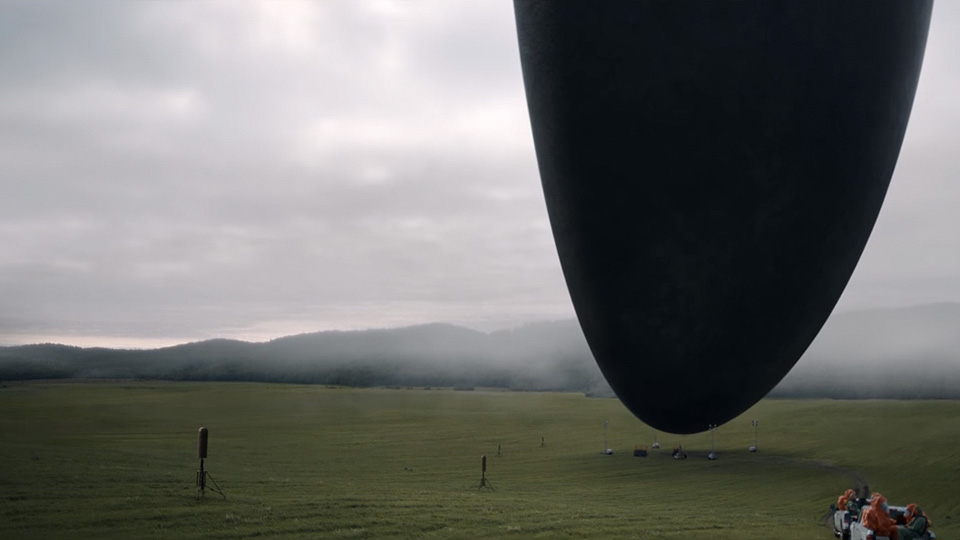
From the film's premiere, critics have been raving about Arrival. It's clear that Arrival will be a massive awards juggernaut. Centering on Dr. Louise Banks, played by Amy Adams, Arrival tells the story of first contact with aliens. When twelve extraterrestrial spacecrafts show up at random locations in the world, the US government sends Banks, a renowned linguist, to try and decipher their language and teach them English, trying to find out why they have arrived at our planet. At face value, this seems like a modern version of Contact, the Matthew McConaughey / Jodie Foster film that isn't held in very high regard. But Arrival examines many deep existential questions. Through Banks' interactions with the "heptapods", it asks the viewer what humanity is. How do we define our life? Do we accept the possibility that our way of life could be wrong? Why do we perceive life as a sequence of events rather than one life? These are not questions I expected to be asking myself in a science fiction movie. A warning: Arrival is a thinker. Some people will get lost, and that's no fault of their own. However, if you want a great theological experience, Arrival is your movie.
Most of the praise has found itself gravitating towards Amy Adams. She's one of the most consistent performers in Hollywood, and she does not disappoint here. I hesitate to call it her career best performance because American Hustle presents her with a meatier role, but she is excellent here nonetheless. She seems to be the only one concerned with leaning the heptapod's language, which leads into one of the movie's key themes: government ignorance. The army is concerned with why they're here, and that's it. They can't seem to wait for Dr. Banks to complete her study. The film presents a negative portrayal of the armed forces, but one that I suspect isn't too far from the truth if aliens showed up on our doorstep tomorrow. The confidence in not only herself, but the heptapods, makes her a very likeable protagonist. The other characters are really afterthoughts aside from Jeremy Renner's character, who is a very admirable second-in-command to Dr. Banks.
The main reason why I loved Arrival was for its deep messages. There are many religious undertones to the film. Twelve ships arrive, which prompts Christian groups to declare the Rapture underway. A key point in the plot reveals an algebraic formula that equals 1/12, and that is no coincidence. Parallels between the aliens and angels, and the stereotypes with them are made. If aliens descend they will bring chaos. If angels descend they will bring benevolence. The heptapods appear as Gods and are treated as such. Another key theme is what it means to be human. The heptapods experience time as one plane. They know the past, present, and future all at once. At one scene Dr. Banks explains that humans experience time in a sequential manner only because it is the only way we know how. We're not incapable of learning new things, we just naturally do what's normal. As humans communicate in long phrases with clauses (and let me tell you, English is the messiest language they could teach aliens) they reply with one continual symbol every time. Their sentences are one symbol, each one with tiny flecks of difference to indicate clauses, conjunctions, and the merging ideas. It's something so advanced, but Arrival's message is that it should not be that advanced. Why can't we do that? Why have we developed into a nation and world where we don't understand each other, and our most powerful tool and weapon- language, is rendered useless.
My only complaint with Arrival is that it gets a little carried away. There is a mind-blowing twist halfway through the film. I love a good twist, but this is the first one that I actually did not immediately understand. I had to ask to figure out what was happening. I fear this will happen to many people, and I think the makers of the film could have executed that pivotal scene to make it a little simpler to comprehend. The film also takes some leaps at explaining time. It's really stretching the possibilities I know to be true from my background, but I'm not an expert. If you really want a good movie, see Arrival. If you like juicy, head-scratching, message-heavy movies, see Arrival. It would be a massive snub if this did not get Oscar nominations across the board, and I even see it winning some.
Rating:
From the film's premiere, critics have been raving about Arrival. It's clear that Arrival will be a massive awards juggernaut. Centering on Dr. Louise Banks, played by Amy Adams, Arrival tells the story of first contact with aliens. When twelve extraterrestrial spacecrafts show up at random locations in the world, the US government sends Banks, a renowned linguist, to try and decipher their language and teach them English, trying to find out why they have arrived at our planet. At face value, this seems like a modern version of Contact, the Matthew McConaughey / Jodie Foster film that isn't held in very high regard. But Arrival examines many deep existential questions. Through Banks' interactions with the "heptapods", it asks the viewer what humanity is. How do we define our life? Do we accept the possibility that our way of life could be wrong? Why do we perceive life as a sequence of events rather than one life? These are not questions I expected to be asking myself in a science fiction movie. A warning: Arrival is a thinker. Some people will get lost, and that's no fault of their own. However, if you want a great theological experience, Arrival is your movie.
Most of the praise has found itself gravitating towards Amy Adams. She's one of the most consistent performers in Hollywood, and she does not disappoint here. I hesitate to call it her career best performance because American Hustle presents her with a meatier role, but she is excellent here nonetheless. She seems to be the only one concerned with leaning the heptapod's language, which leads into one of the movie's key themes: government ignorance. The army is concerned with why they're here, and that's it. They can't seem to wait for Dr. Banks to complete her study. The film presents a negative portrayal of the armed forces, but one that I suspect isn't too far from the truth if aliens showed up on our doorstep tomorrow. The confidence in not only herself, but the heptapods, makes her a very likeable protagonist. The other characters are really afterthoughts aside from Jeremy Renner's character, who is a very admirable second-in-command to Dr. Banks.
The main reason why I loved Arrival was for its deep messages. There are many religious undertones to the film. Twelve ships arrive, which prompts Christian groups to declare the Rapture underway. A key point in the plot reveals an algebraic formula that equals 1/12, and that is no coincidence. Parallels between the aliens and angels, and the stereotypes with them are made. If aliens descend they will bring chaos. If angels descend they will bring benevolence. The heptapods appear as Gods and are treated as such. Another key theme is what it means to be human. The heptapods experience time as one plane. They know the past, present, and future all at once. At one scene Dr. Banks explains that humans experience time in a sequential manner only because it is the only way we know how. We're not incapable of learning new things, we just naturally do what's normal. As humans communicate in long phrases with clauses (and let me tell you, English is the messiest language they could teach aliens) they reply with one continual symbol every time. Their sentences are one symbol, each one with tiny flecks of difference to indicate clauses, conjunctions, and the merging ideas. It's something so advanced, but Arrival's message is that it should not be that advanced. Why can't we do that? Why have we developed into a nation and world where we don't understand each other, and our most powerful tool and weapon- language, is rendered useless.
My only complaint with Arrival is that it gets a little carried away. There is a mind-blowing twist halfway through the film. I love a good twist, but this is the first one that I actually did not immediately understand. I had to ask to figure out what was happening. I fear this will happen to many people, and I think the makers of the film could have executed that pivotal scene to make it a little simpler to comprehend. The film also takes some leaps at explaining time. It's really stretching the possibilities I know to be true from my background, but I'm not an expert. If you really want a good movie, see Arrival. If you like juicy, head-scratching, message-heavy movies, see Arrival. It would be a massive snub if this did not get Oscar nominations across the board, and I even see it winning some.
Rating:
Sunday, December 4, 2016
Fantastic Beasts and Where to Find Them Review
Starring: Eddie Redmayne, Katherine Waterston, Dan Fogler, Alison Sudol, Colin Farrell, Carmen Ejogo, Ezra Miller, Samantha Morton, Ron Perlman, Jon Voight
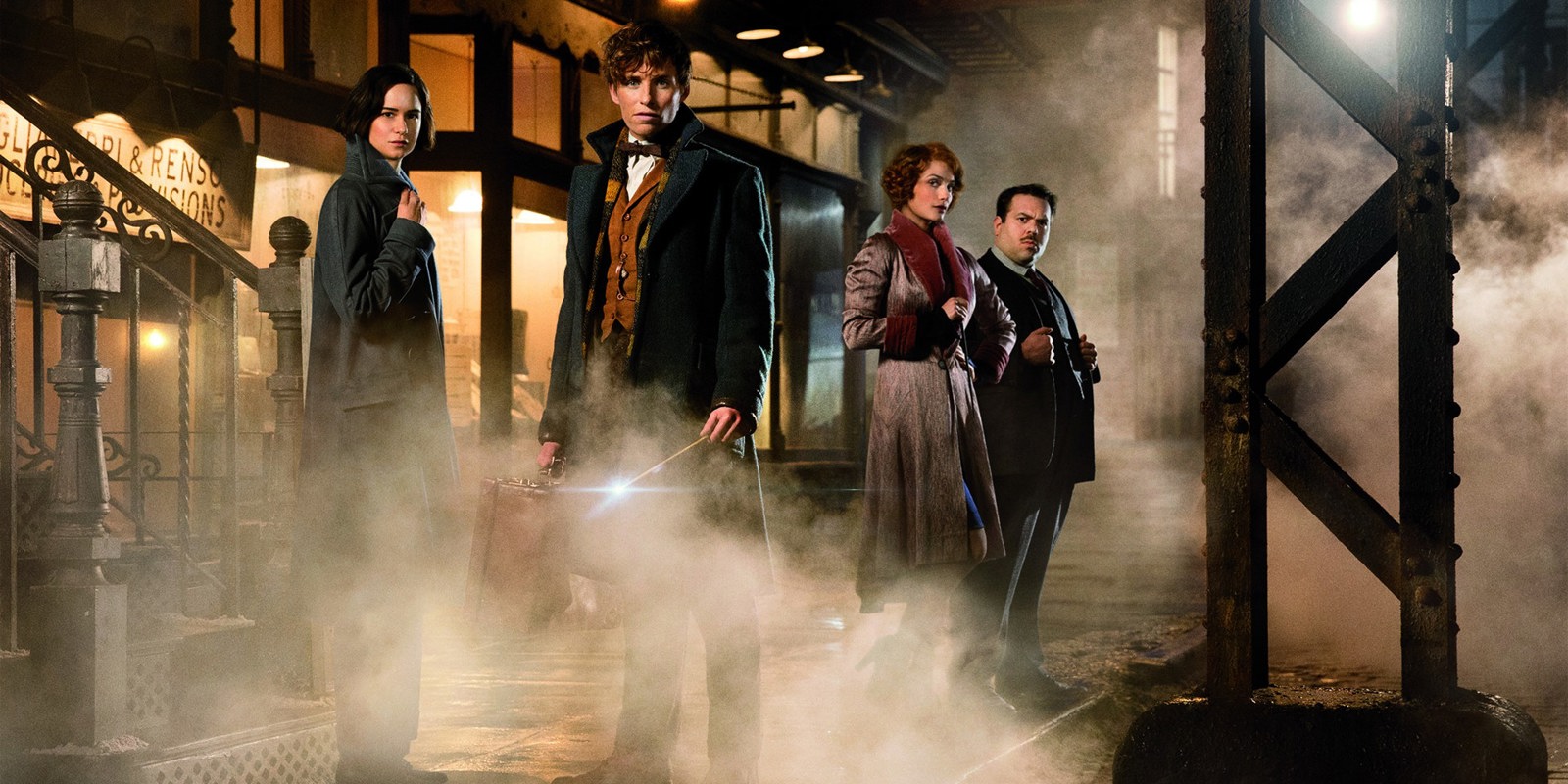
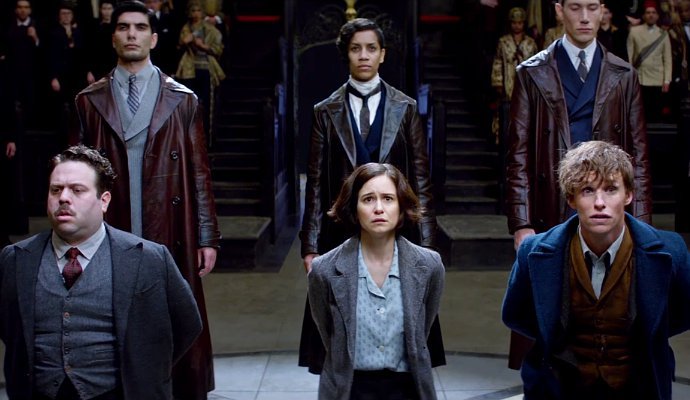
Full Disclosure: I'm a Harry Potter superfan. I first saw Fantastic Beasts on opening night (two weeks ago) and have seen it again since. Why wait for this review? I needed to get all my excitement and bias out. Now that I have seen it twice and had some time, I think I can attack this without any sort of bias. Fantastic Beasts and Where to Find Them is an expertly-crafted movie. With this brand, you expect nothing but greatness at this point. J.K. Rowling and co. spend so much time and money, and you know their attention to detail is spectacular. For people expecting a sequel to Harry's adventures, or a story based off of Rowling's new eighth book, this is a completely original story. It's based off of the book of the same name (which was really just a gimmicky "textbook") and is written by Rowling herself. So it is canon, and falls into the Harry Potter universe, set 90 years ago. So essentially she's trying to bridge the gap between then and the first book. Following Newt Schmander, a British wizard in New York, Fantastic Beasts and Where to Find Them is a magical tale that will capture the imagination and attention of the viewer. J.K. Rowling is the screenwriter here, and she seamlessly adapts to the craft. This is simply just a really well-written film, even if it's not perfect.
To be honest, I didn't love Eddie Redmayne in the lead role. I don't doubt his acting ability. He did a really good job in the role that was given to him. Newt Schmander just isn't a character I'm dying to see in a sequel. He doesn't really have any interesting facets to his character other than a mysterious old flame. I much preferred the female characters. Tina, played by Waterston, is a great voice of reason. I really liked her character. The same goes for Queenie, played by Sudol. She doesn't have a lot of character development, but just like Jacob, I was drawn to her allure, and that's just due to some great casting. Jacob was by far my favorite. I really liked the idea of exploring a Muggle (No-Maj is not catching on) and his perspective of the Wizarding World. Colin Farrell is also a really great villain. He acts effortlessly, and proves that he is such an underrated talent. I could go into more detail, but I'm trying to avoid spoiling for anyone who may not have seen the film yet.
As far as the Beasts go, they are all incredibly well-realized. From the adorable Niffler (my favorite), to the gigantic Erumpent, to the deadly Swooping Evil, all of them capture the imagination. Also well-realized was the theme of persecution. There is a group called the "Second Salem-ers", group of religious nuts who want to bring forth another purge against magic in America. The cult leader is depicted as a ruthless human mother who beats her children into submission, and in doing so creates a horrendous danger. The theme of repressing your true self, and how this repression can create a monster is a powerful theme. While the Harry Potter series had many themes about life and death, I've never seen the franchise tap into this sort of imagery. Plus, Harry Potter took place in a Wizarding community, so the types of bigotry against them was nonexistent. It's interesting to see the other side, where the Wizarding world is the minority. I also found it fascinating to see the American version of magic, where everything is regulated by rules and everyone wants to be secret. You even have to register for a wand permit. I laughed at that, because it's such an American thing.
Here is where my criticism lies, and I'll try to avoid spoiling. Aside from not being very interested in Eddie Redmayne's Newt Scmander, I really did not like the President of the American Wizarding community. I thought she was so incompetent, but I don't think she was meant to be. The thing she just allows to happen at the end of the film is so irresponsible. Colin Farrell literally looks at her and says "Do you realized what you've just done?" She was such an unlikable character to me. I also felt like the film dragged a little bit in the middle. Somewhere in between beasts, where they were just explaining what an Obscurus was and taking 30 minutes on Newt and Tina's death sentence. Honestly, if it was a proper execution, that would be much cleaner and quicker. That was just ridiculous. In an "American Harry Potter" film, I expected to see the American Hogwarts, but instead was introduced to an American Ministry that was really quite boring. None of the characters aside from Farrell's captivated me, and I found those scenes seemed to waste time. I also personally didn't like Newt doing the mating dance. Loved the Erumpent, but thought his crude dance was unneeded and played for laughs, which it did not bring in my theater.
So here's my verdict. Fantastic Beasts is a great movie. It's of a quality better than some of the lower-level Harry Potter films (I'm looking at you, Chamber of Secrets and Deathly Hallows- Part 1) and craft-wise, it's astounding. The 3D was some of the best I've seen, and it transported me back to a world I haven't been to in a long time. As far as a sequel, I personally don't want to see Newt Schmander. I think a sequel should examine some of the other "loose ends" of the movie's end (if you've seen the film, you probably know what I'm talking about) and just disregard Schamander. It's not without it's flaws, but it's overall a really magical experience.
Rating:
Full Disclosure: I'm a Harry Potter superfan. I first saw Fantastic Beasts on opening night (two weeks ago) and have seen it again since. Why wait for this review? I needed to get all my excitement and bias out. Now that I have seen it twice and had some time, I think I can attack this without any sort of bias. Fantastic Beasts and Where to Find Them is an expertly-crafted movie. With this brand, you expect nothing but greatness at this point. J.K. Rowling and co. spend so much time and money, and you know their attention to detail is spectacular. For people expecting a sequel to Harry's adventures, or a story based off of Rowling's new eighth book, this is a completely original story. It's based off of the book of the same name (which was really just a gimmicky "textbook") and is written by Rowling herself. So it is canon, and falls into the Harry Potter universe, set 90 years ago. So essentially she's trying to bridge the gap between then and the first book. Following Newt Schmander, a British wizard in New York, Fantastic Beasts and Where to Find Them is a magical tale that will capture the imagination and attention of the viewer. J.K. Rowling is the screenwriter here, and she seamlessly adapts to the craft. This is simply just a really well-written film, even if it's not perfect.
To be honest, I didn't love Eddie Redmayne in the lead role. I don't doubt his acting ability. He did a really good job in the role that was given to him. Newt Schmander just isn't a character I'm dying to see in a sequel. He doesn't really have any interesting facets to his character other than a mysterious old flame. I much preferred the female characters. Tina, played by Waterston, is a great voice of reason. I really liked her character. The same goes for Queenie, played by Sudol. She doesn't have a lot of character development, but just like Jacob, I was drawn to her allure, and that's just due to some great casting. Jacob was by far my favorite. I really liked the idea of exploring a Muggle (No-Maj is not catching on) and his perspective of the Wizarding World. Colin Farrell is also a really great villain. He acts effortlessly, and proves that he is such an underrated talent. I could go into more detail, but I'm trying to avoid spoiling for anyone who may not have seen the film yet.
As far as the Beasts go, they are all incredibly well-realized. From the adorable Niffler (my favorite), to the gigantic Erumpent, to the deadly Swooping Evil, all of them capture the imagination. Also well-realized was the theme of persecution. There is a group called the "Second Salem-ers", group of religious nuts who want to bring forth another purge against magic in America. The cult leader is depicted as a ruthless human mother who beats her children into submission, and in doing so creates a horrendous danger. The theme of repressing your true self, and how this repression can create a monster is a powerful theme. While the Harry Potter series had many themes about life and death, I've never seen the franchise tap into this sort of imagery. Plus, Harry Potter took place in a Wizarding community, so the types of bigotry against them was nonexistent. It's interesting to see the other side, where the Wizarding world is the minority. I also found it fascinating to see the American version of magic, where everything is regulated by rules and everyone wants to be secret. You even have to register for a wand permit. I laughed at that, because it's such an American thing.
Here is where my criticism lies, and I'll try to avoid spoiling. Aside from not being very interested in Eddie Redmayne's Newt Scmander, I really did not like the President of the American Wizarding community. I thought she was so incompetent, but I don't think she was meant to be. The thing she just allows to happen at the end of the film is so irresponsible. Colin Farrell literally looks at her and says "Do you realized what you've just done?" She was such an unlikable character to me. I also felt like the film dragged a little bit in the middle. Somewhere in between beasts, where they were just explaining what an Obscurus was and taking 30 minutes on Newt and Tina's death sentence. Honestly, if it was a proper execution, that would be much cleaner and quicker. That was just ridiculous. In an "American Harry Potter" film, I expected to see the American Hogwarts, but instead was introduced to an American Ministry that was really quite boring. None of the characters aside from Farrell's captivated me, and I found those scenes seemed to waste time. I also personally didn't like Newt doing the mating dance. Loved the Erumpent, but thought his crude dance was unneeded and played for laughs, which it did not bring in my theater.
So here's my verdict. Fantastic Beasts is a great movie. It's of a quality better than some of the lower-level Harry Potter films (I'm looking at you, Chamber of Secrets and Deathly Hallows- Part 1) and craft-wise, it's astounding. The 3D was some of the best I've seen, and it transported me back to a world I haven't been to in a long time. As far as a sequel, I personally don't want to see Newt Schmander. I think a sequel should examine some of the other "loose ends" of the movie's end (if you've seen the film, you probably know what I'm talking about) and just disregard Schamander. It's not without it's flaws, but it's overall a really magical experience.
Rating:
Monday, November 28, 2016
Moonlight Review
Starring: Trevante Rhodes, Ashton Sanders, Alex Hibbert, André Holland, Jharrel Jerome, Janelle Monáe, Naomie Harris, Mahershala Ali
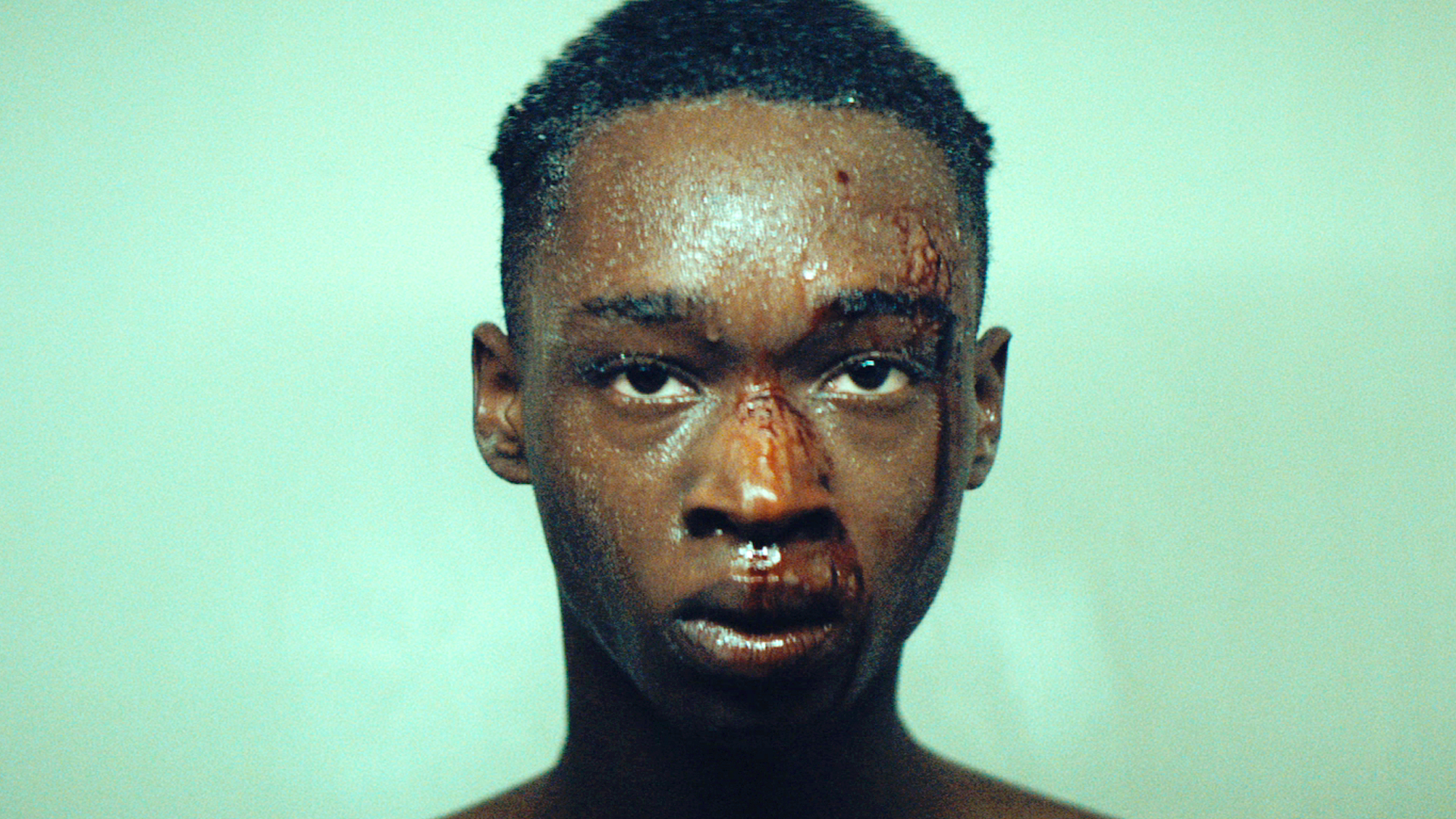
Moonlight is a heavy film. Watch the trailer, and you'll see that it's not a conventional coming-of-age story. Moonlight centers around a young African-American man in three stages of his life: his childhood, adolescence, and adulthood. The film itself is divided into three chapters and is very reminiscent of a play, of which it is based on. Chiron begins as a young boy living in rural inner-city Miami. His negligent mother is spiraling in and out of drug-induced stupors, leaving Chiron (who doesn't realize his nickname Little is a schoolyard taunt) to fend for himself. The kids beat him up and torment him for "being a fag", and he gravitates towards Juan, a local drug dealer who shows him kindness. The events that transpire in the years following show a young man struggling to accept himself and struggling with his identity. The two figures in his life: Juan, a mentor, and his drug-addicted mother, are masterfully contrasted in their tender and distant connections with the protagonist. While Moonlight addresses preconceived ideas about being gay and self-acceptance, it truly is about what it's like to grow up black in a community where the odds are stacked against you. It is a beautiful story, and while dull in areas, it is powerful and affecting all the same. Whether you identify with growing up poor, black, gay, or simply the pressures of being yourself, Moonlight finds a way to affect every viewer.
As far as acting goes, the three portrayals of Chiron (Little, Chiron, and Black) all make a strong impression. Personally, I feel the young Chiron was the most affecting. It's not pleasant to watch a small kid running for his life from bullies, and that's where this film opens. For such a small child, he painfully knows so much about his world. One of the most powerful moments is when he sits down with Juan and asks him if he deals drugs. Juan tells him the truth. He asks Juan if he gives drugs to his mom. Juan tells him the truth. He asks what "a fag" is and if he is one. Juan replies "No. You could be gay. But you don't gotta let nobody call you a fag." It's such a touching scene, and the simplicity of the moments between Juan and Chiron soon disappear. When he grows up, his life becomes more complicated. Pursued by rumors of his sexuality, he's beaten up by his best friend. His dreams are haunted by longing for this friend and the sting of rejection. His mother is nowhere to be seen unless she needs money for drugs. A woman who was once "trying" is now seen as a disheveled mess, jealous of the love Juan's wife Teresa (played beautifully by Janelle Monáe) gives her son.
It is the final act that brings the film full circle. When Chiron becomes an adult, he becomes the same man Juan was. He was unable to escape the confines of his community and has fallen in the same hole. He's dealing drugs to people like his mother. He dresses with a bandana like Juan and wears grills in his teeth. By rejecting his mother and accepting Juan, he has basically become the amn. It is in this form, Juan has a lasting presence in the film, as he unfortunately dies off screen between parts 1 and 2. Mahershala Ali (Remy from House of Cards) does an exceptional job in this small supporting role. I cannot see him not receiving a nomination for his excellent performance. The same goes for Paula, played by Naomie Harris, who is the exact opposite. Her desperation for drugs blinds her to her child's needs. When the youngest Chiron is onscreen, we see her as a monster. Her behavior is robbing him of a normal childhood, and she is indifferent to his need for attention and love. As he grows up, we see her clean and begging for forgiveness. Paula is not a monster. She's not heartless like other portrayals of abusive moms. She is a product of drugs and bad decisions, and the bleak portrait of her helplessness is very powerful. The climax of the film is in the third act, where Chiron visits her in rehab. A shell of her former self, she looks for forgiveness, begging: "You don't gotta love me. But you're gonna know that I love you."
Moonlight is a coming-of-age tale that is very selective. My best comparison is Boyhood from 2014. That film is true to just about every kid growing up, and allows you to witness a child gradually becoming aware of the vast world around him. Moonlight is different. It is essentially about what it's like to be black, yet it somehow speaks to more than just skin color. The race and sexuality issues are able to illustrate a portrait of a man trying to feel at home in his own skin, yet still depict marginalized individuals. My only complaints for Moonlight are pace problems. It was often times a little too slow for me, and felt like it was moving at a snail's pace, especially in Act II. Occasionally I understood the choices, but at times I thought it needed to move more quickly. Anyways, if you want to see a surefire Oscar nominee, Moonlight will undoubtedly be in consideration, and I strongly believe it will get a lot of support. It's certainly a film that will make you think about your life.
Rating:
Moonlight is a heavy film. Watch the trailer, and you'll see that it's not a conventional coming-of-age story. Moonlight centers around a young African-American man in three stages of his life: his childhood, adolescence, and adulthood. The film itself is divided into three chapters and is very reminiscent of a play, of which it is based on. Chiron begins as a young boy living in rural inner-city Miami. His negligent mother is spiraling in and out of drug-induced stupors, leaving Chiron (who doesn't realize his nickname Little is a schoolyard taunt) to fend for himself. The kids beat him up and torment him for "being a fag", and he gravitates towards Juan, a local drug dealer who shows him kindness. The events that transpire in the years following show a young man struggling to accept himself and struggling with his identity. The two figures in his life: Juan, a mentor, and his drug-addicted mother, are masterfully contrasted in their tender and distant connections with the protagonist. While Moonlight addresses preconceived ideas about being gay and self-acceptance, it truly is about what it's like to grow up black in a community where the odds are stacked against you. It is a beautiful story, and while dull in areas, it is powerful and affecting all the same. Whether you identify with growing up poor, black, gay, or simply the pressures of being yourself, Moonlight finds a way to affect every viewer.
As far as acting goes, the three portrayals of Chiron (Little, Chiron, and Black) all make a strong impression. Personally, I feel the young Chiron was the most affecting. It's not pleasant to watch a small kid running for his life from bullies, and that's where this film opens. For such a small child, he painfully knows so much about his world. One of the most powerful moments is when he sits down with Juan and asks him if he deals drugs. Juan tells him the truth. He asks Juan if he gives drugs to his mom. Juan tells him the truth. He asks what "a fag" is and if he is one. Juan replies "No. You could be gay. But you don't gotta let nobody call you a fag." It's such a touching scene, and the simplicity of the moments between Juan and Chiron soon disappear. When he grows up, his life becomes more complicated. Pursued by rumors of his sexuality, he's beaten up by his best friend. His dreams are haunted by longing for this friend and the sting of rejection. His mother is nowhere to be seen unless she needs money for drugs. A woman who was once "trying" is now seen as a disheveled mess, jealous of the love Juan's wife Teresa (played beautifully by Janelle Monáe) gives her son.
It is the final act that brings the film full circle. When Chiron becomes an adult, he becomes the same man Juan was. He was unable to escape the confines of his community and has fallen in the same hole. He's dealing drugs to people like his mother. He dresses with a bandana like Juan and wears grills in his teeth. By rejecting his mother and accepting Juan, he has basically become the amn. It is in this form, Juan has a lasting presence in the film, as he unfortunately dies off screen between parts 1 and 2. Mahershala Ali (Remy from House of Cards) does an exceptional job in this small supporting role. I cannot see him not receiving a nomination for his excellent performance. The same goes for Paula, played by Naomie Harris, who is the exact opposite. Her desperation for drugs blinds her to her child's needs. When the youngest Chiron is onscreen, we see her as a monster. Her behavior is robbing him of a normal childhood, and she is indifferent to his need for attention and love. As he grows up, we see her clean and begging for forgiveness. Paula is not a monster. She's not heartless like other portrayals of abusive moms. She is a product of drugs and bad decisions, and the bleak portrait of her helplessness is very powerful. The climax of the film is in the third act, where Chiron visits her in rehab. A shell of her former self, she looks for forgiveness, begging: "You don't gotta love me. But you're gonna know that I love you."
Moonlight is a coming-of-age tale that is very selective. My best comparison is Boyhood from 2014. That film is true to just about every kid growing up, and allows you to witness a child gradually becoming aware of the vast world around him. Moonlight is different. It is essentially about what it's like to be black, yet it somehow speaks to more than just skin color. The race and sexuality issues are able to illustrate a portrait of a man trying to feel at home in his own skin, yet still depict marginalized individuals. My only complaints for Moonlight are pace problems. It was often times a little too slow for me, and felt like it was moving at a snail's pace, especially in Act II. Occasionally I understood the choices, but at times I thought it needed to move more quickly. Anyways, if you want to see a surefire Oscar nominee, Moonlight will undoubtedly be in consideration, and I strongly believe it will get a lot of support. It's certainly a film that will make you think about your life.
Rating:
Subscribe to:
Posts (Atom)